Post-Show Discussion Activity
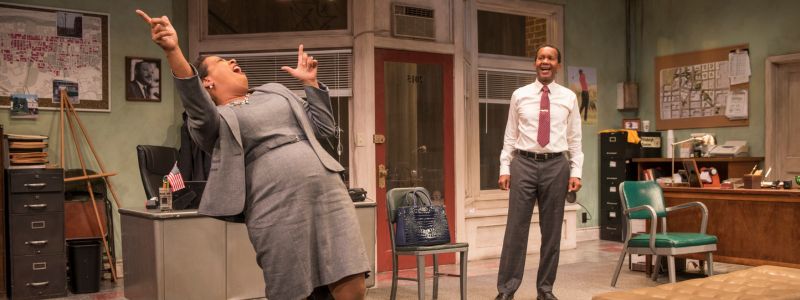
Use these questions to reflect, discuss, or journal about your experience and reactions to Radio Golf. Explore any of the questions that interest you.
If engaging in this activity independently, consider taking notes or writing your reflections down. If engaging in this activity with a class or group, decide if you would like to answer every question in order, skip around, or select certain questions to spend time on.
Discussion Questions
- This play was written in 2005 and takes place in 1997. How do its themes around re/development, corporate investment, and the revitalization of Black neighborhoods resonate today?
- Why do you think August Wilson chose to name this play Radio Golf?
- Harmond accuses Roosevelt of being the “black face” for his white investor. How do these two men dance with or reconcile their proximity to whiteness and the social and economic power it grants them?
- Both Ole Joe and Sterling come into the development office, bringing with them strong beliefs that oppose the initially shared vision between Roosevelt, Harmond, and Mame. How do these “outsiders” to this business venture shift the dynamics between these three characters?
- What is the lasting impact of war on the characters in Radio Golf?
- Very early in the play, there is a debate over whether to honor the 22-year history of a health center or to honor the first Black registered nurse by renaming the development. Which name would you vote for? What is the right balance between honoring current, living history and the history that is at risk of becoming forgotten?
- Harmond is running for office to be the first Black mayor of Pittsburgh. How do you see his experience as a portent or reflection of politics today?
- Radio Golf is deeply connected to the history of August Wilson’s first play in the Century Cycle, Gem of the Ocean. Old Joe’s house is 1839 Wylie Avenue. It was Aunt Ester’s house, later owned by Black Mary, both from Gem of the Ocean, and Joe is Black Mary’s son. Meanwhile, Harmond’s grandfather was Cesar Wilks, Black Mary’s half-brother. What added meaning or significance is imbued in Radio Golf by this connection?
- This activity aligns with the following standards:
- Illinois Arts Learning Standards
- Anchor Standard 7: Perceive and analyze artistic work.
- Anchor Standard 8: Construct meaningful interpretations of artistic work.
- Anchor Standard 11: Relate artistic ideas and works with societal, cultural, and historical context to deepen understanding.
- Common Core State Standards
- CCSS.ELA.SL.1 Prepare for and participate effectively in a range of conversations and collaborations with diverse partners, building on others’ ideas and expressing their own clearly and persuasively.
- CCSS.ELA.RL.3 Analyze how and why individuals, events, and ideas develop and interact over the course of a text.
- Illinois Arts Learning Standards