Open Rehearsal: The Court Theatre Blog

Page 1 of 26 pages  1 2 3 >  Last »

August 31, 2010

2010 Jeff Awards

by Drew Dir in 2009/2010 Season


Timothy Edward Kane in The Illusion, directed by Charles Newell

Court Theatre was honored by an incredible 18 Jeff nominations for the 2009/10 Season including nods for The Comedy of Errors director Sean Graney and his production of The Mystery of Irma Vep last fall at Court.

Court Theatre is honored by the eighteen 2010 Joseph Jefferson Award nominations it received for the 2009/10 season. We extend our sincere appreciation to all of the artists and audiences who made Court’s 55th season an incredible year. Below is a list of Court Theatre’s nominations.

PRODUCTION - PLAY - LARGE
The Illusion
Ma Rainey’s Black Bottom
The Mystery of Irma Vep

ENSEMBLE
“Ma Rainey’s Black Bottom”

DIRECTOR - PLAY
Sean Graney - “The Mystery of Irma Vep”
Charles Newell - “The Illusion” Erik Hellman and Chris Sullivan in The Mystery of Irma Vep, directed by Charles Newell

ACTOR IN A PRINCIPAL ROLE - PLAY

Erik Hellman - “The Mystery of Irma Vep”
Chris Sullivan - “The Mystery of Irma Vep”

SOLO PERFORMANCE
Mary Beth Fisher - ”The Year of Magical Thinking

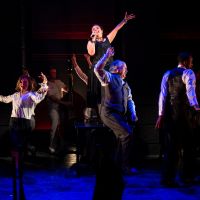
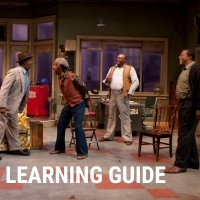
The cast of Ma Rainey’s Black Bottom, directed by Ron OJ Parson ACTOR IN A SUPPORTING ROLE - PLAY
Allen Gilmore - ”Sizwe Banzi is Dead
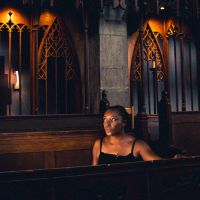
Timothy Edward Kane - “The Illusion”

SCENIC DESIGN - LARGE
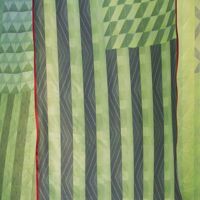
John Culbert - “Ma Rainey’s Black Bottom”
Collette Pollard - “The Illusion”

Allen Gilmore in Sizwe Banzi is Dead, directed by Ron OJ Parson COSTUME DESIGN - LARGE
Jacqueline Firkins - “The Illusion”
Alison Siple - “The Mystery of Irma Vep”

SOUND DESIGN - LARGE
Joshua Horvath and Nick Keenan - “The Illusion”
Joshua Horvath and Ray Nardelli - “Ma Rainey’s Black Bottom”

LIGHTING DESIGN - LARGE
John Culbert - “The Illusion”


Mary Beth Fisher in The Year of Magical Thinking, directed by Charles Newell

\  

August 17, 2010

First Rehearsal for The Comedy of Errors

by Drew Dir in 2010/2011 Season, The Comedy of Errors

Yesterday was a day of “firsts” at Court Theatre’s rehearsal hall. Most remarkably, it was the first rehearsal of the 2010-11 Season, and to mark the occasion, Artistic Director Charlie Newell gave a warm welcome to the assembled cast, artistic team, and staff before introducing Steve Albert, who also happened to be starting his first official day as Court Theatre’s new Executive Director. Yesterday was also the first time that all of us had the opportunity to hear Sean Graney’s new adaptation of William Shakespeare’s The Comedy of Errors as read by the six-member cast. Before that, though, the Comedy of Errors design team presented their models and sketches for the visual world of the play:


The Comedy of Errors scenic model, designed by Tom Burch.

The Comedy of Errors takes place in Ephesus, which director Sean Graney and scenic designer Tom Burch have envisioned as a once-prosperous city fallen on hard times. The setting of a city street is typical of Roman farce, from which Shakespeare adapted his play. Sean also gave Tom three “starting points” for thinking about the look of the play: postwar East Berlin, eighteenth-century France, and the torture room from the Saw horror movies. Tom gravitated toward French architectural elements but also French portrait paintings, which he described as society’s artistic outlet for thinking about the self (identity is an important theme in Comedy of Errors). Tom also envisioned Ephesus as being so desperate that its citizens have had to use scraps of doors, windows, even works of art to patch up its crumbling infrastructure (the doors will also open and close as the rate of entrances and exits increase). Lighting designer Heather Gilbert also hinted at some of the surprising sources of light that will appear from behind the wall of doors and windows.


The Antipholus twins, both played by Erik Hellman. Costumes designed by Jacqueline Firkins.


The Dromio twins, both played by Alex Goodrich. Costumes designed by Jacqueline Firkins.

For the costumes, designer Jacqueline Firkins had to tackle the practical problem of designing costumes for six actors playing twenty different characters. Each character must be sharply distinct from the others, but their costumes must be simple enough for the actors to change quickly from costume to costume (audience members who saw The Mystery of Irma Vep are familiar with this challenge). For visual inspiration, Jacqueline drew from a range of styles and periods in order for the costumes to telegraph both a historical and a contemporary sensibility.


A Boatswain and the “Angry Merchantess,” both played by Stacy Stoltz. Costumes designed by Jacqueline Firkins.


Dr. Pinch and the goldsmith Angelo, both played by Kurt Ehrmann. Costumes designed by Jacqueline Firkins.

After the designers finished their presentations, the cast began to read the play for the first time. Sean has been adapting the script so that all the characters can be performed by six actors, but this was the first time everyone had the chance to see how it was going to work. Some of the choices Sean has made with the play have never been done before with Comedy of Errors, and the result has been a new, nuanced reading of an often overlooked Shakespearean comedy. For the assembled crew, however, the most important revelation of the day was how truly funny this four hundred year-old piece remains to this day.

Check back here for more behind-the-scenes updates as we delve further into the rehearsal process!

The Comedy of Errors by William Shakespeare opens September 16, 2010. It is adapted and directed by Sean Graney.

\  

July 13, 2010

Audiences v. Spectators

by Drew Dir in 2010/2011 Season, The Comedy of Errors

Today, we have a very clear word to describe the group of people who come to see a play.  We call them “audience.”  However, this word doesn’t truly do justice to what seeing a play entails.  “Audience” comes from the Latin word audire, meaning “to listen.”  When we see theater, we not only listen to it, but also watch it.  There is no English word which encompasses both.

Thus, in the mid-sixteenth century, when theaters as we know them first appeared, and the idea of a group of people paying to go to a theater and see a show first emerged in the collective consciousness, a massive semantic debate began.  What should this group of people be called?  There were two distinct schools, which each espoused a different theory as to why theater happens.  The first was the audire school.  They argued that that the true merit in theater is hearing beautiful poetry read out loud.  Championed by poet-playwrights, such as Ben Jonson, artists of this school appealed to a wealthy, educated audience who would sit in the galleries and let the beautiful words wash over them.  They called playgoers “auditors,” or “the audience.”  The second school championed the Latin word spectare, meaning “to watch.”  They believed theater should be a massive visual spectacle, involving dancing, elaborate costumes, and over-the-top stage business, like in the court masques of Inigo Jones.  They mainly appealed to the “groundlings,” manual laborers, artisans, and merchants who would pay the lowest ticket prices to stand en masse and watch a show.  These playgoers were less educated, and would rather watch a stunning visual display which they could interact with.  Artists of this school called playgoers “spectators.”

Clearly, the first school won, and today, we speakers of English call our playgoers “audience,” and not “spectators.”  However, the terms of the debate still live on.  Which is more important in a play: beautiful language, or awesome onstage action?  Do you go to theater to watch something you could never see in your day-to-day, or do you go to hear words which move you?

Most good theater combines both.  A good play should have moments of poetry, where we are bowled over by the power of words, and moments of spectacle, where we can simply watch and be amazed.  Shakespeare is a master at creating this balance.  His plays have beautiful sonnets, and lines which are so perfect that they are part of our common vocabulary.  They also have massive stage fights, ridiculous clowning, unusual costumes, and magic influences.  Shakespeare dexterously pulled the best of both schools, and it is perhaps why, among other things, his work has lived on in a way that the plays of his contemporaries haven’t. 

—Will Bishop, Production Dramaturgy Intern

The Comedy of Errors by William Shakespeare opens September 16, 2010. It is adapted and directed by Sean Graney.

\  

July 7, 2010

Playgoing in Shakespeare’s London

by Drew Dir in 2010/2011 Season, The Comedy of Errors

Going to a play in Elizabethan England was an entirely different experience as it is today.  At the time, playgoing was considered a crude, almost sinful entertainment, often likened to going to a whorehouse.  Playhouses in London were completely shut down in 1642 for breeding frivolity in a harsh political climate.  Whores and cutpurses were far more common to find at the theater than they are today.  Unaccompanied women would often get sexually assaulted, and full-fledged brawls, either between audience members or the audience and the actors, shut down a number of performances. 
Even when playgoing was not violent or criminal, it was an entirely different experience from today.  Firstly, most of Shakespeare’s plays ran at under two hours.  Today, the same plays usually come in at at least three hours.  This means the action of the play, as well as the dialogue, was extremely fast-paced, to the point where audiences would completely ignore large sections of the play.  They would eat, smoke, talk, laugh, yell, throw things at the stage, try to converse with actors, and generally ignore every rule of theater decorum we’ve currently established.  Going to a play was thus much less about seeing a work of art, and much more about having a great time.  If the play itself wasn’t amusing, you were free to amuse yourself as you saw fit.  Playgoing four hundred years ago was in many ways similar to going to a bar with live music today.  If you enjoy the band, you can watch them play.  If not, there is nothing wrong with socializing as well.
The playgoing experience was also completely conditioned by social class.  The more you paid for tickets, the “better” seats you got.  This created a highly stratified physical structure for the audience.  The “best” seats depended on the theater.  In some, like the Globe, where Shakespeare’s company worked, the best seats were boxes behind the stage or special chairs onstage.  The poorest stood on the ground in front of the stage.  In this system, the best seats did not have the best view, but they allowed the whole audience to look at you – again revealing that going to a play often had very little to do with watching plays.  In other playhouses, the reverse was true – the better the view, the more the tickets, establishing the system of tiered ticketing we use in theaters today.  Whether rich or poor though, the level of carousing was the same.  The rich would flaunt their position, wearing massive hats and smoking expensive tobacco during the shows, while the poor would chew on apples, tossing the cores onstage during scenes they didn’t like.
Those interested in learning more about Elizabethan theater should read Playgoing in Shakespeare’s London, by Andrew Gurr, who revolutionized the subject by exploring the conditions of both rich and poor at the theaters, as well as tracking the changing role of theater throughout the Elizabethan period.

—Will Bishop, Production Dramaturgy Intern

The Comedy of Errors by William Shakespeare opens September 16, 2010. It is adapted and directed by Sean Graney, the founder of the Hypocrites.

\  

July 2, 2010

“George Washington’s Fortune”

by Drew Dir in


George Washington, as a nineteen year-old surveyor. (Wax model at Mount Vernon, Virginia)

A selection from “George Washington’s Fortune” from Patriotic Plays and Pageants for Young People (1912) by Constance D’Arcy Mackay:

WASHINGTON.
Now for my wilderness chart!

[Pores over it. From the distance comes the sound of a frontiersman’s ax, which he is too absorbed to notice. Red Rowan enters from the right, a wild, picturesque young figure in a scarlet cloak.

WASHINGTON.
(to himself, as he bends over his chart).
‘Tis not so easy as Little Hunting Creek!

RED ROWAN
(approaching him).
Nothing is easy in the wilderness!

WASHINGTON
(starting up, gazing at her, and then brushing his hand across his eyes).
I thought I was studying before the fire; but instead I’ve been dreaming . . . dreaming!

RED ROWAN
(shaking her head).
No dream! Only a woodsman’s daughter. You can hear my father yonder, felling oaks. I saw the glimmer of your fire and came.

WASHINGTON.
(with a boyish courtesy and shyness).
Will you—will you not be seated?

RED ROWAN
(seated on bearskin, looking at fire).
Folks call me Red Rowan.

WASHINGTON.
My name is Washington. George Washington.

RED ROWAN
(still looking at the fire).
You have a shrewd fire, and the air is chill in these mountains.

WASHINGTON.
Will you not have some bacon and bread? I wish there were more to offer you.

RED ROWAN
I’ll have a taste of the bacon and a morsel of bread. (Washington begins to prepare them). I thank you.

WASHINGTON.
(toasting bread and bacon).
The wilderness must be rough-seeming to you.

RED ROWAN
I’m well-used to deep forests and long, hard journeys, for the love of a trail is in my blood. My grandfather was a gentleman rover, and my father a frontiersman, and my mother was—a gipsy.

WASHINGTON.
(surprised).
A gipsy?

Read the rest of the play, and even more bizarre American pageants for children, at Project Gutenberg.

\  

Page 1 of 26 pages  1 2 3 >  Last »