Historical Background and Dramaturgy
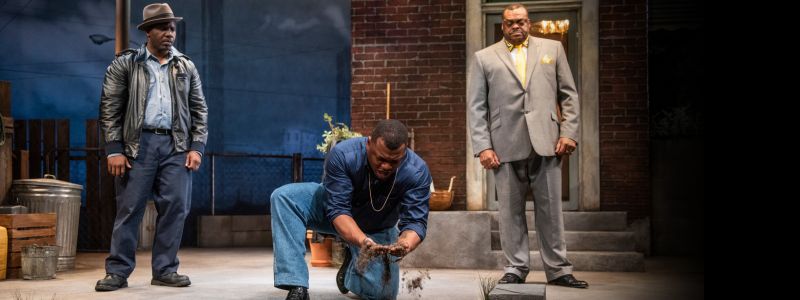
Explore the historical context of King Hedley II and the dramaturgy underpinning Court Theatre’s production.
Dramaturgy
- Connection to Seven Guitars
This play references and expands upon several characters’ stories within Seven Guitars. Some listed below:- Floyd “Schoolboy” Barton is one of the main characters in Seven Guitars. At the beginning of the play, other characters mourn his death, and by the end of the play, the audience sees how he has died. In King Hedley II, Stool Pigeon gives King a machete that King’s father used to kill Floyd Barton.
- In Seven Guitars, a pregnant Ruby comes to stay with her aunt after some relationship issues. She is pregnant and tells Hedley about what happened between her lover and husband, and decides to have sex with Hedley. In King Hedley II, Ruby is also a prominent character and her trouble with Elmore and Leroy is revealed in detail to her son King. Elmore is only referenced in Seven Guitars, and he is a prominent character in King Hedley II.
- In Seven Guitars, Ruby decides she wants King Hedley to be the father of her children. In King Hedley II, Ruby’s Aunt Louise raised King while Ruby travelled as a singer, and King remembers his mother fondly.
- The character Red Carter in Seven Guitars is the father of Mister from King Hedley II.
Historical Background
- The Reagan Administration (1981-1989)
Study up on the political and economic landscape of the era.- Ronald Reagan – Cold War, Tax Cuts, Diplomacy (Article)
- Reaganomics (Article)
- President Ronald Reagan on American Tax Dollars (2:00)
- Reagan’s “Rising Tide” (Article)
- The Reagan administration’s budget cuts: Their impact on the poor (Article)
- Reaganomics explained (3:00)
- Supply Side Economics (3:00)
- Trickle-Down Economics: The Lie That Sold Modern Capitalism (15:00)
- Ronald Reagan’s Long-Hidden Racist Conversation With Richard Nixon (Article)
- Reagan, Nixon, and Race (Article)
- President Reagan’s Call for Crime Reform (5:00)
- 1980s Pittsburgh
What was Pittsburgh like in the 1980s? These resources will help you understand the landscape of the city in Wilson’s penultimate decade in the Century Cycle.