The Power of Voice: Rockefeller Chapel and Tituba
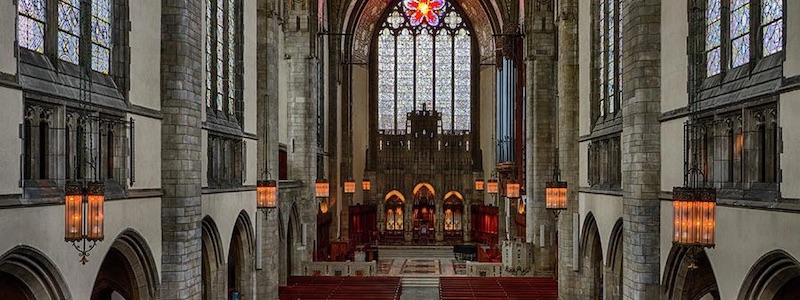
At the threshold of this great chapel, visitors are greeted with our founder’s voice carved into stone: “As the spirit of religion should penetrate and control the university, so that building which represents religion ought to be the central and dominant feature of the university group.”
Our work, in the nearly one hundred years since our opening, has sought to balance fidelity to that original vision with hospitality and innovation. Each week, hundreds of visitors flow through our doors for religious, spiritual, artistic, and meditative purposes. People come to pray, to mourn, to attune to their bodies, to hone their musical craft, to hear and feel a part of wider stories about our world. This broad welcome and pluralistic ethos probably does not summon the words “penetrate and control” to many of our guests’ minds. Yet the boldness of that guiding conviction–that our highest values ought to shape our innermost selves and our common life–raises essential questions that remain urgent in our day.
Martin Luther King, Jr.–who has multiply preached from the pulpit at the front of our sanctuary–wrote while incarcerated in Birmingham City Jail that “groups tend to be more immoral than individuals.” His was not a theology of cynicism, but a recognition that collectives hold tremendous power, easily marshalled towards either healing or destructive purposes. Without careful self-reflection and moral curiosity, groups naturally tilt towards disorder and cruelty: Who must be disposed of? Who will be cast out? Whose voice shall hold sway?
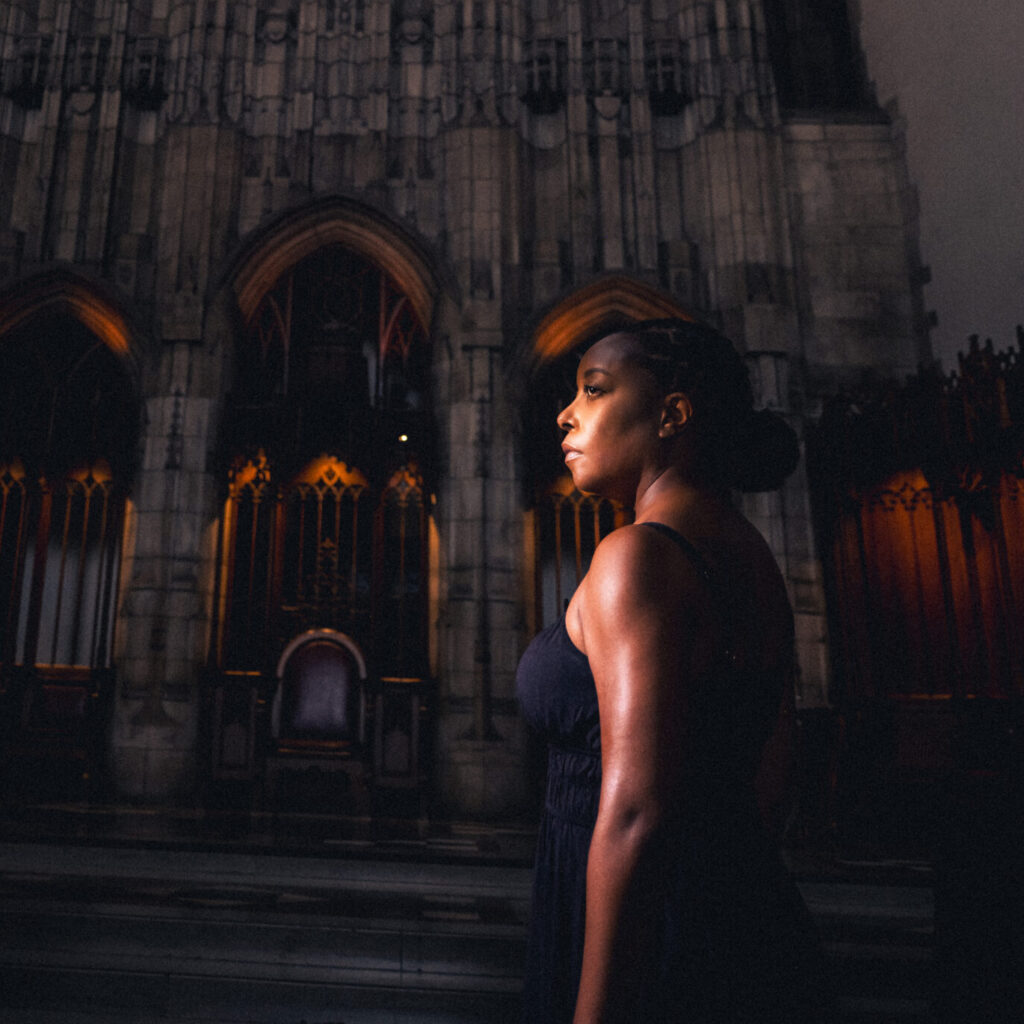
In Tituba, such a village convenes in a chapel, in a Salem courtroom, animated by such a spirit of chaos. They have gathered to overhear these proceedings, to see about penetration and control, to be bewitched, to scapegoat.
The Rockefeller and Spelman families who commissioned this building were Northern Baptists and ardent abolitionists. Their ethical concern was that groups gathering here would be shaped towards a gospel of social justice. Their architectural technique: to uphold the primacy of the spoken Word. By clear dint of voice, divine knowledge could be soberly proclaimed and put into action. Thanks to careful design, new testaments could be made here–speech acts conveying freedom with crisp clarity even to those slumped in the back pew.
More than half a century later, in a different age, creative Chicago engineers reversed the flow of our sonic river–lacquering the ceiling and recalibrating the space to rather treasure the sound of music. Rhetoric now contends differently here. A sanctuary meant to mantle a single voice now angles towards chorus, polyphony, harmony.
As Tituba’s story is reimagined here, I invite you into a tradition of diligent eavesdropping that has been unfolding in this space for nearly a century. The precision and rationality of the word, the ecstasy and madness of music. How does this history–of call and response, thesis and antithesis, intention and innovation–shape our attention this evening? How does soaring stonework and its artisans’ choices–such as the natural world imagery, or the Indigenous Sioux designs secreted by Hildreth Meière into the corners of her ceiling tiles–contour how we hear Tituba’s contested voice in our own time of cruelty and disorder?
Tell me about a complicated woman. Tituba’s epic voice, unconquered after centuries, still contains multitudes. She refuses to be pinned down, even by her narrowest narrators, refusing to cede her life to fate carved into stone.
Tituba runs from December 10 – December 20, 2026. Tickets are available online or by calling the Box Office at (773) 753-4472.